THE PULSE / FDA & REGULATORY
HHS Opens the Door to Six Popular Peptides. Here's What Actually Changed.
BPC-157, TB-500 and four others can now be made by licensed pharmacies without federal pushback, under strict rules. It's not an FDA approval. Here's the difference, in plain English.
Key Takeaways
Licensed pharmacies can now make six peptides, including BPC-157 and TB-500, without facing federal enforcement, as long as they follow strict rules.
This is not FDA approval. The FDA has not found any of the six safe or effective.
The policy is temporary and can change. A permanent decision could take years.
The Bigger Picture
If you've spent any time on wellness social media, you've probably heard of BPC-157. Or TB-500. Or a dozen other peptides sold online in tiny vials labeled "research use only" — a label that means not for human use, which hasn't stopped a lot of humans from using them.
On October 28, the federal government made its biggest move yet on this market. The U.S. Department of Health and Human Services said it will not take action against licensed pharmacies that make six of these peptides for patients with a prescription, as long as they follow a strict set of rules. Some headlines called it an approval. It isn't. What it actually is turns out to be more interesting, and more temporary.
“The law hasn't changed. What changed is what the government says it will enforce.”
1. What HHS Announced
The policy covers six peptides: BPC-157, TB-500, KPV, MOTS-c, Epithalon and Semax. It was signed by Health Secretary Robert F. Kennedy Jr., a vocal supporter of peptides, and published in the Federal Register on October 30.
It applies to state-licensed pharmacies, federal facilities and licensed physicians that make medications for individual patients. This is known as 503A compounding, after the section of federal law that governs it. Larger outsourcing facilities, which make drugs in bulk under a different section of the law, are not included.
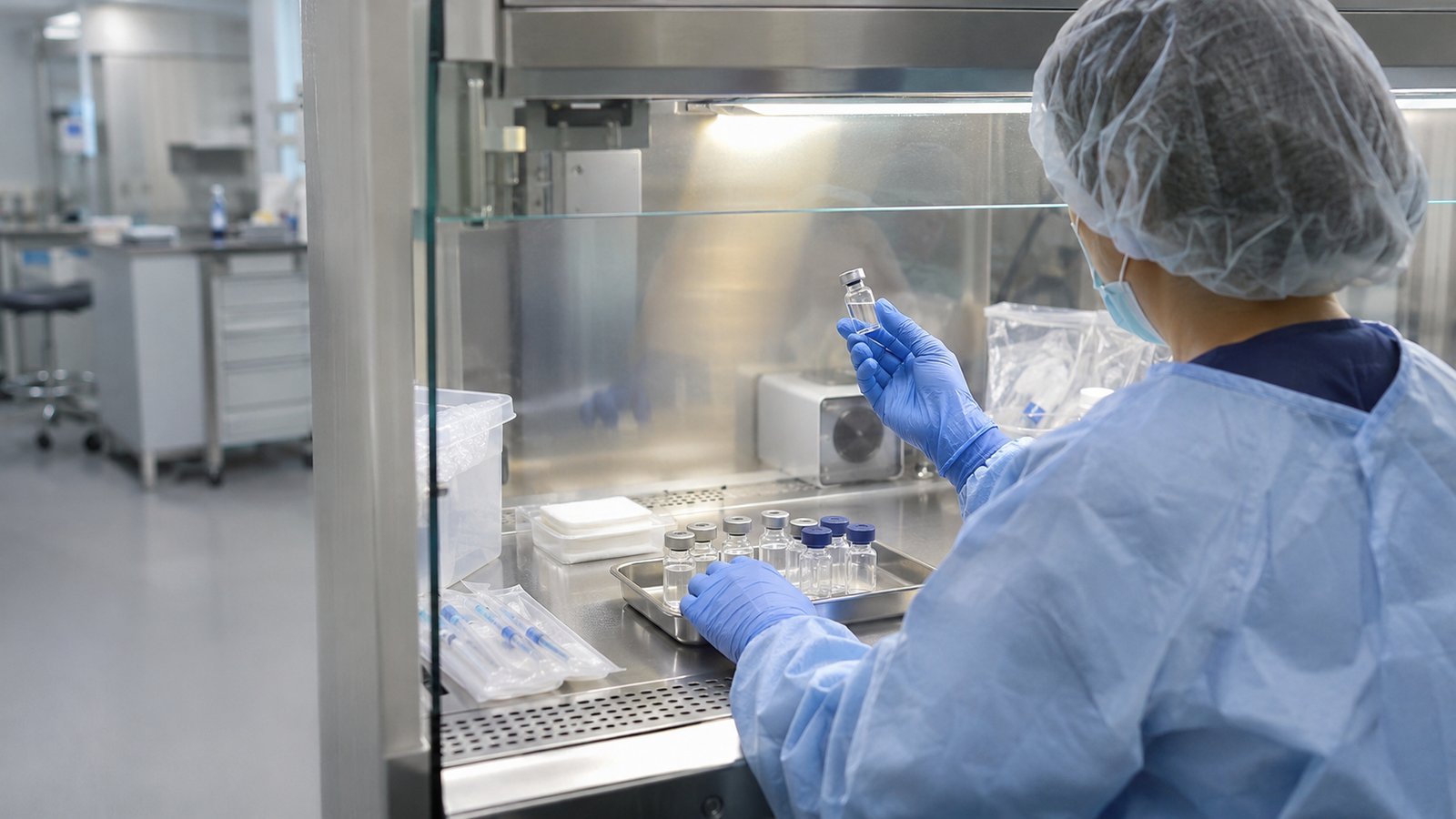
The rules are strict. Every product needs a prescription written for a specific patient. The raw ingredient must come from an FDA-registered manufacturer that meets federal manufacturing standards, with lab results confirming what it is and that it's free of contaminants. Each product can contain only one peptide, so no blends. Each peptide is limited to certain forms; Semax, for example, is covered only as a nasal spray. Labels must read: "This is a compounded drug product. Not for resale." And pharmacies must report serious side effects to the FDA.
View the official notice2. What "Enforcement Discretion" Means
This is the phrase that matters most, and the one most headlines skipped. Enforcement discretion means the law stays exactly the same. The government is simply announcing that it won't act against certain conduct, under certain conditions, for now.
Think of a city that says it won't ticket cars on one street while it rewrites its parking rules. The no-parking sign is still up. The city has just said it won't enforce it, and it can start writing tickets again whenever it wants.
The notice is clear about this. It says the policy is not binding on HHS or the public and creates no legal rights. HHS also says it may revisit the policy if safety or quality problems appear.
3. What This Does — and Doesn't — Change
Here's the practical change: a licensed pharmacy that meets every condition can now make these six peptides without expecting federal enforcement, and patients can get them only with a prescription from a licensed clinician. HHS says the goal is to pull demand away from "research-use-only" peptides from foreign manufacturers, which it says "pose a safety risk to US patients." In its words, the policy offers "a more controlled alternative."
Here's what it doesn't do. It doesn't make any of the six FDA-approved. It doesn't mean the FDA has found them safe or effective; compounded drugs aren't reviewed by the FDA for safety, effectiveness or quality before they reach patients. It doesn't add them to the official list of ingredients pharmacies may routinely use. And it doesn't override state law. State pharmacy boards can set stricter rules, so access may depend on where you live.
Don't expect pharmacy shelves to fill overnight, either. Suppliers and pharmacies first have to verify that their ingredients meet the new requirements. Joshua Fritzler, president of a Florida compounding company, put it simply to NPR: "We won't be able to meet demand."
4. Why Scientists Are Divided
The policy follows a July meeting of the FDA's Pharmacy Compounding Advisory Committee, an outside panel that advises the agency. The panel voted to recommend six of the seven peptides it reviewed. Several votes were close: BPC-157, KPV and TB-500 each passed 8 to 6, with one abstention.
The FDA's own scientists had recommended against all of them. In their review, they described the human studies as too short, too small and too limited to show the peptides are safe or effective, and they flagged gaps in basic data on impurities and contamination. Advisory votes are recommendations, not decisions.
Supporters see the policy as harm reduction: people are already using these peptides, so better they come from a licensed pharmacy than an anonymous website. Critics see a shortcut around the drug approval process. The consumer group Public Citizen has urged HHS to withdraw the policy. "All peptide substances should go through the standard FDA approval process for new drugs," said Dr. Robert Steinbrook, who directs the group's Health Research Group. Both points can be true at once: better quality control can lower some risks, while the evidence on whether these peptides work remains thin.
5. What to Watch Next
Public comments on the policy close on November 13. After that, the policy is meant to stay in place until the FDA decides, through formal rulemaking, whether each peptide belongs on the official list. That process requires a proposed rule, another round of public comment and a final rule. Legal analysts say it could take one to two years, or longer. Meanwhile, a petition from the Partnership for Safe Medicines, a coalition that includes pharmacy groups, asks the FDA not to allow this compounding at all. And the advisory committee is expected to review five more peptides, including GHK-Cu and Melanotan II, by the end of February 2027.
For now, the most useful question isn't "Is this peptide legal?" It's: Who made it? Who prescribed it? And what does the evidence actually show for the reason I'd be taking it? Those are conversations for a licensed clinician. The Pulse will keep following this story as it develops.
Sources
- HHS, "Enforcement Discretion Policy Regarding 503A Compounding Using Certain Peptide Bulk Drug Substances," Federal Register — October 30, 2026
- NPR via WAMC, "Trump administration will allow pharmacies to make popular peptides" — October 28, 2026
- RAPS Regulatory Focus, "HHS will permit compounding of six peptides ahead of formal rulemaking" — October 29, 2026
- AJMC, "HHS Draft Policy Eases Enforcement on 6 Compounded Peptides" — October 2026
- AJMC, "FDA Panel Backs 6 Peptides for Compounding" — July 31, 2026
- Arnold & Porter, "HHS Announces Draft Enforcement Discretion Policy" — November 2, 2026
- Bass, Berry & Sims, "FDA Advisory Committee Recommends Six Peptides for Compounding" — July 31, 2026
For educational purposes only. This information does not replace personalized medical advice, diagnosis or treatment.